How to make money trading meme coins in 2026 with a simple app workflow
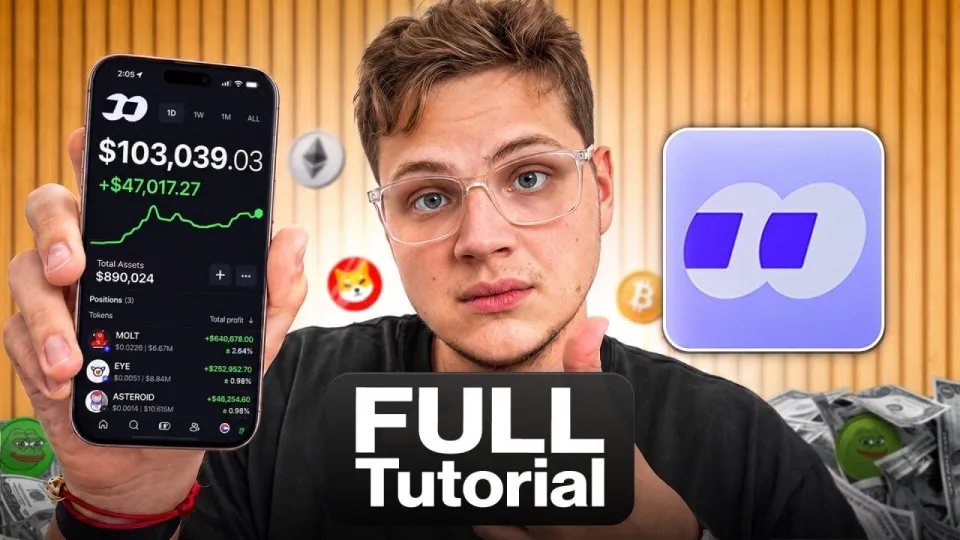
Video: How To Make Money Trading Memecoins (fomo app tutorial)
Want articles like this for your own video to promote it on YouTube and Google? Order them through the Telegram bot @sat_sit_bot. Articles with your video embedded are written and posted by the bot itself — on popular topical sites (no ads). Your first 50 articles are free.
· based on the channel Orangie Web3
Meme coins are highly volatile tokens with no cash flow, so the realistic way to make money trading them is to treat each trade as a short-term bet with a fixed risk limit: find a token early, buy a small position through a fast app like fomo.family, and sell into strength before liquidity dries up. Profit comes from a repeatable process — position sizing, quick execution and discipline on exits — not from hunting a single 1000x coin. This guide breaks down that process, including the traps that cost most beginners their deposits.
What meme coin trading actually is in 2026
A meme coin is a token whose price is driven almost entirely by attention, community and narrative rather than revenue or utility, and on chains like Solana a new one can launch and peak within hours. That changes the skill set: you are not analysing earnings, you are judging whether a story is spreading and whether there is enough liquidity to get out. Traders usually work with small amounts, take profits in stages and accept that a meaningful share of trades will go to zero. The upside is asymmetric — a 20% position that triples pays for several losses — but only if the losses stay small and controlled.
How a meme coin trading app shortens the path from idea to order
A dedicated meme coin app compresses discovery, charting and execution into one screen, which is the whole point when a token's window lasts minutes. The workflow shown in the Orangie Web3 tutorial on the fomo trading platform follows a simple loop:
- Open the app and browse trending or newly launched tokens instead of hunting across multiple sites.
- Check the chart and recent activity to see whether volume is rising or already fading.
- Set the amount you are willing to risk before you look at the buy button.
- Execute the buy, then immediately note your target and your stop level.
- Sell in portions as the price moves, rather than waiting for one perfect exit.
Registering through the platform link gives you access to the same interface used in the walkthrough: fomo.family registration. The value of a single-interface app is mostly speed and fewer mistakes — fewer wrong contract addresses, fewer failed swaps, fewer panicked clicks during a candle.
Position sizing and risk rules that keep you in the game
Risk control is the only part of meme coin trading you fully control, so decide the numbers before any token appears on your screen. A workable framework for a small account:
- Cap each trade at 1–5% of your trading capital; a total loss on one token should be annoying, not fatal.
- Keep a cash reserve so a drawdown does not force you to sell a good position to fund a bad one.
- Predefine two exits: a partial profit target and a hard invalidation level where you accept the loss.
- Avoid adding to a losing meme coin position; averaging down assumes the token will recover, which most do not.
- Track every trade in a simple log so you can see whether your wins actually outweigh your losses after fees.
One viewer of the tutorial described draining a wallet, reloading with about $90 and making roughly $30 in a day before giving some back. That pattern — a fast gain followed by a slow give-back — is the normal failure mode when position size and exits are not fixed in advance.
Why copy trading meme coins usually means buying someone else's exit
The most upvoted warning under the video is that big traders often buy a token on a separate account before buying from their main wallet, so the visible buy that followers copy is the one that moves price against them. Copy trading feels safe because someone else appears to have done the research, but by the time a trade is broadcast the entry is already worse than the trader's own fill. If you still want to follow wallets, treat it as a signal to research, not an instruction to buy, and check the chart and liquidity yourself before committing any capital.
Alerts, exits and the practical habits that separate winners from bag holders
Price alerts and a written exit plan matter more than the entry, because meme coin liquidity can vanish faster than any stop order executes. Practical habits from experienced traders:
- Set alerts on the tokens you hold and on ones you are watching, so you act on data instead of refreshing charts.
- Sell a portion into the first strong spike; the second and third legs are never guaranteed.
- Watch holder concentration and liquidity depth — a token where a few wallets hold most of the supply can be dumped on you at any moment.
- Expect slippage on the way out, and factor it into your profit target.
- Step away after a big win; revenge trading after a loss is the fastest route to zero.
A frequently requested feature in the community is native price alerts inside the trading app itself, which tells you how much traders depend on notifications rather than screen-watching.
Common questions from new meme coin traders
Beginners tend to ask the same things, and the answers are mostly about expectations rather than secret strategies. Many want to know whether meme coins are too risky to touch at all — they are risky, but the risk is manageable when each position is small and the exit is planned. Others ask how much starting capital is enough; on Solana-style chains, small amounts work because fees are low, but the amount should still be money you would not miss. A third recurring question is how to avoid getting dumped on, which comes down to checking holder distribution and liquidity before buying. Finally, newcomers often ask whether coaching or live sessions exist to answer their specific questions — structured communities and Discord servers are the usual substitute, and the tutorial's own Discord is linked below.
Useful links
- fomo trading platform: https://fomo.family/r/orangie
- Discord community: https://discord.gg/memecoins
- Instagram: https://www.instagram.com/orangieyt/
Final thoughts on trading meme coins responsibly
Meme coin trading can be profitable, but it rewards process over conviction: small positions, fast execution, planned exits and a hard limit on how much you are willing to lose. The fomo app walkthrough from Orangie Web3 is a useful starting point because it shows the full loop — discovery, chart check, buy and sell — inside a single interface, which is exactly where beginners make avoidable errors. Treat every token as a lottery ticket with a price cap, keep a trade log, and ignore anyone promising guaranteed 1000x returns. If you want to follow along with the same setup, start with the fomo.family sign-up link and paper-trade the workflow before risking real money.
Key takeaways
- Meme coin profits come from speed and risk control, not from picking a single 1000x token.
- A trading app such as fomo.family bundles token discovery, charts and buy/sell in one interface, so a trade takes seconds.
- Copy trading is dangerous: large traders often pre-buy on a separate wallet before their main-wallet buy pumps the price.
- Most traders lose money, so position size per meme coin should be money you can afford to lose entirely.
- Price alerts and a written exit plan matter more than the entry, because meme coin liquidity disappears fast.
Questions & answers
How much money do I need to start trading meme coins?
You can start with a small amount because fees on chains like Solana are low, but the sum should be money you can afford to lose entirely. A common approach is to risk 1–5% of your trading capital per token, so a $100 account means $1–5 per trade. The goal of the first weeks is learning the workflow, not maximizing profit.
Is copy trading a reliable way to profit from meme coins?
Usually not. Large traders often buy on a separate wallet before their main-wallet purchase, so followers enter at a worse price and effectively provide exit liquidity. Treat wallet activity as a research signal and verify the chart, liquidity and holder distribution yourself before buying.
Why do most meme coin trades end in a loss?
Because attention fades fast and liquidity disappears before many holders can sell. Traders who buy late, size too large or wait for one perfect exit often give back gains in a single candle. Fixed profit targets, partial sells and a hard invalidation level reduce that risk.
Do I need price alerts to trade meme coins effectively?
Alerts help a lot, since meme coin moves happen in minutes and constant screen-watching leads to impulsive decisions. Set alerts on your holdings and watchlist, and combine them with a written plan for what you will do when each level hits. If the app lacks native alerts, use a separate alert tool.
Source: How To Make Money Trading Memecoins (fomo app tutorial) · Markdown version